Support vital abortion stigma busting efforts today!
DONATE
From Silence to Solidarity: March 28 to Destigmatize Abortions
Posted March 26, 2026 byPRESS RELEASE.
Campaign calls for a shift “from silence to solidarity” as abortion stigma continues to restrict healthcare worldwide.
Activists, healthcare providers, artists, and community organizers across the world will mobilize on March 28 for the Global Day of Action to Destigmatize Abortions, a growing international campaign calling for stigma-free abortion care and renewed attention to the barriers people still face in accessing it.
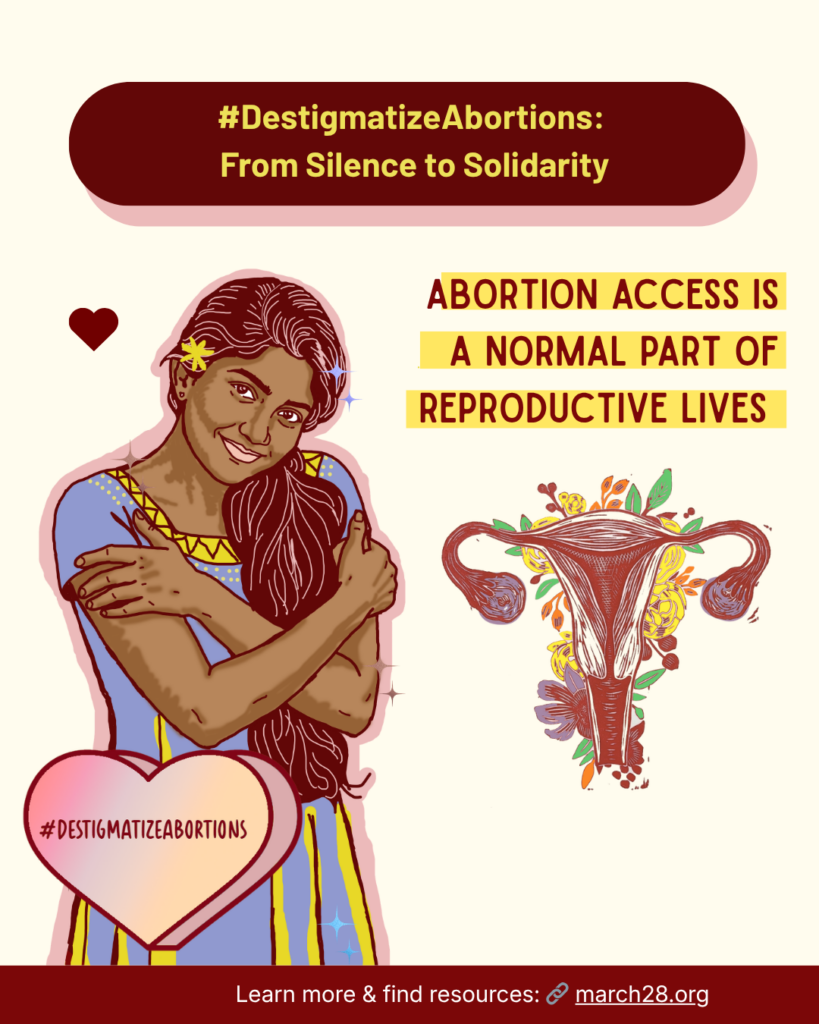
The campaign highlights a simple but often silenced reality: abortion is a normal part of reproductive lives, but it is still heavily stigmatized.
Globally, abortion remains one of the most common healthcare experiences. According to the World Health Organization, an estimated 73 million abortions occur worldwide each year, and 1 in 3 women will have an abortion in their lifetime, according to the Guttmacher Institute.
Despite being common healthcare, abortion continues to be surrounded by stigma, misinformation, and restrictive policies that push people into isolation, unnecessary risks, y and prevent many from accessing safe care. Advocates say this contradiction is not accidental: Abortion stigma is deeply rooted in historical patriarchal systems that have sought to control women’s lives and limit their autonomy.
This year’s campaign centers on the theme “From Silence to Solidarity,” is encouraging people to speak openly about abortion and support the networks of care that make access possible.
“Abortion stigma isolates the millions of people having abortions and pushes them into silence,” said Mariana González C. from inroads – International Network for the Reduction of Abortion Discrimination and Stigma. “Stigma doesn’t just shape conversations; it shapes policies, healthcare systems, and people’s ability to seek care without fear. When we challenge stigma together, we help transform isolation into solidarity and support.”
Advocates emphasize that legal reform alone does not guarantee real access to abortion care.
“Changing laws is important, but laws on paper do not automatically translate into real access to care,” said Kasia, co-creator of SAFE – Supporting Abortion for Everyone and activist of Abortion Without Borders. “Ireland is often cited as a success story after abortion was legalized in 2018, yet many people there still struggle to access services due to limited providers, geographic barriers, and ongoing stigma. Legal does not equal safe and accessible.“
“Even in countries like India, where abortion is legal, the over-medicalisation of the service and provider denials impedes access to safe abortion. There is a huge gap between policy and access. In Benin, despite landmark changes in the law, abortion seekers do not enjoy access to safe abortion, and the services offered are riddled with stigma and judgment. There is a need for holistic action and systems strengthening in India and Benin, where despite laws, access is few and far between.” Debanjana Choudhuri, Executive Director, WGNRR.
The campaign also highlights the growing role of self-managed abortion, which research shows is safe and effective when people have access to accurate information. However, criminalization and stigma around self-managed abortion continue to disproportionately affect marginalized communities. Advocates also point to the growing importance of self-managed abortion as a pathway to expanding access and autonomy in contexts where healthcare systems fail to meet people’s needs.
“Self-managed abortion puts power back into people’s hands,” said Cynthia from MAMA Network. “For many marginalized communities, traditional healthcare systems can be difficult to access. When people have accurate information and access to abortion pills with community accompaniment, they can safely manage their abortions with dignity and support.”
Powerful lessons and examples on support for self-managed abortion access have been documented by feminist accompaniment networks across Latin America, which have played a central role in the region’s historic “Green Wave” movement for reproductive rights.
“Accompaniment is about trust, care, and collective power,” said an activist with Red Necesito Abortar. “It shows what happens when feminist communities come together to support each other through abortion journeys. We are not alone, we walk with one another.” On March 28, they will launch a collective new book that documents accompaniment journeys, with the stories and lessons of this model of collective care.
For years, feminist collectives across the region have organized community-based accompaniment models offering trusted information, emotional support, and practical guidance to people navigating abortion. These grassroots networks have helped thousands access safe abortion care while also transforming public conversations about reproductive autonomy.
“For many people around the world, abortion access is not simply a policy issue — it is a lifeline,” said Hasini from ARROW – Asian-Pacific Resource & Research Centre for Women. “When safe services are blocked by stigma, distance, or restrictive policies, access to abortion information, community support, and self-managed care can mean the difference between safety and harm.”
Through public conversations, storytelling, art, and community-led events, the Global Day of Action invites people everywhere to challenge harmful narratives about abortion and recognize it as an essential part of reproductive healthcare.
More information, campaign resources, and ways to participate can be found at: march28.org